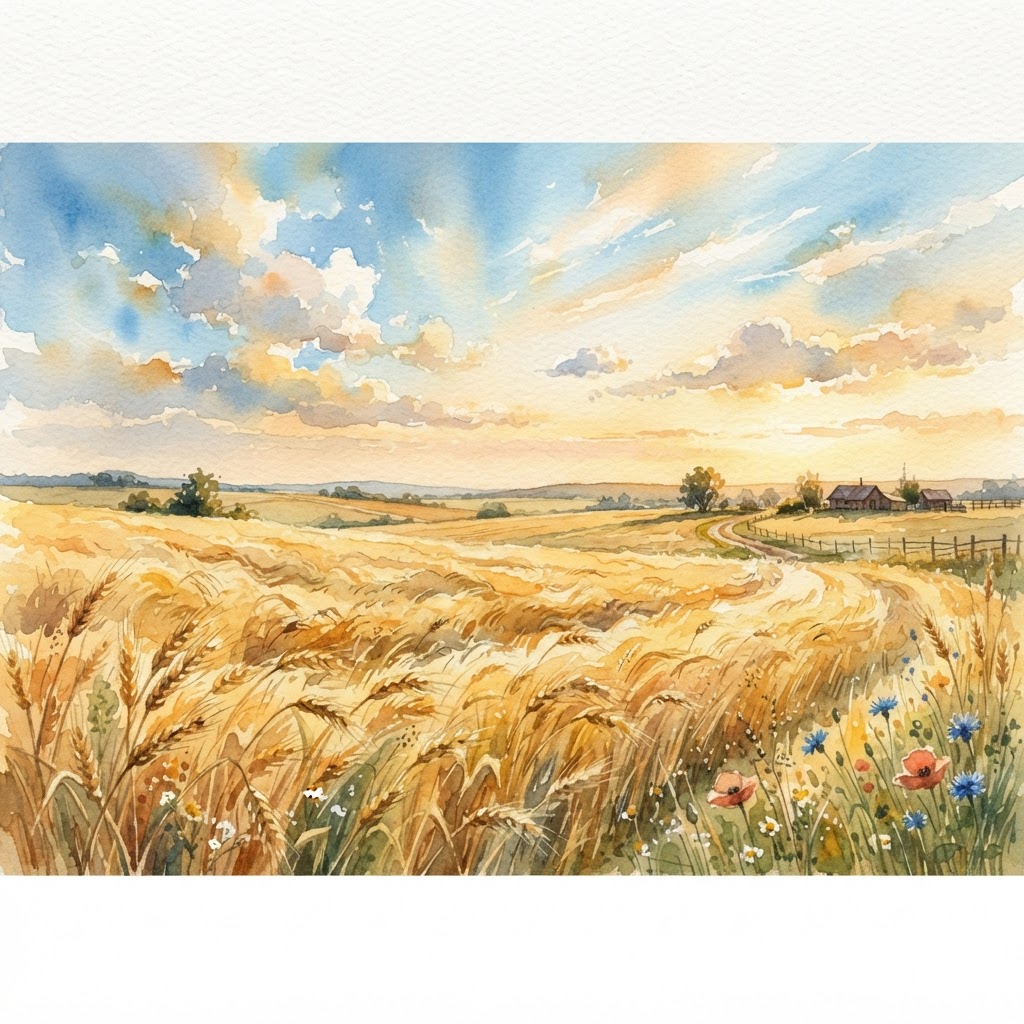
The Infinite Field: Reclaiming Attention from the Economy of Want
To look is a biological necessity; to notice is an act of liberation. We exist in a landscape where the primary commodity is not gold or oil, but the flickering light of our own focus. Our culture is built upon a rigid, desperate architecture of scarcity: the belief that time is a dwindling reservoir and that our attention must be aggressively mined by systems designed to make us feel 'not enough' unless we are consuming, clicking, or comparing. Consider the modern attention economy—an ecosystem predicated on the 'engagement' metric. Platforms are engineered to exploit the primal fear of missing out, triggering a physiological stress response that mimics the ancient panic of a famine. When we scroll, we are not merely seeking information; we are being conditioned to believe that our current reality is insufficient and that something 'better' or more vital is just a swipe away. This is the logic of the enclosure of the commons applied to the human nervous system. We are led to believe our attention is a finite, depleting resource that must be hoarded and protected from the 'competition' of other people’s lives. Yet, this scarcity framework is fundamentally flawed. When we view attention as a limited fuel, we become anxious, fractured, and eventually, depleted. The antidote is not better time management, but a profound shift in orientation toward the abundance of presence. In the tradition of Santosha, or contentment, we begin to realize that the 'enough' we are searching for is not an external condition, but a quality of our own awareness. When we stop viewing our attention as a currency to be spent and start viewing it as a field to be inhabited, the dynamic changes. Imagine if, instead of 'spending' time, we viewed ourselves as 'offering' presence. This is the principle of Dana—generosity. When you look at your child, your partner, or even a simple tree in the park without the intent to extract information or 'capture' the moment for social proof, the sensation of scarcity evaporates. You are no longer competing with the world; you are participating in it. This is the realization of Shunyata—the emptiness of inherent 'self-deficiency'—which reveals that because we are not fixed, isolated entities, we are never actually running out of anything. We are connected to the very fabric of the reality we observe. The abundance we seek is the very act of noticing. Practice for this week: Choose one daily activity you usually rush through—washing the dishes, walking to your car, or brewing tea. For three minutes, anchor your attention entirely in the sensory richness of that act. When the mind whispers that you should be doing something 'more important' or that you are wasting time, label that thought as 'The Scarcity Story.' Gently return to the feeling of the water, the texture of the handle, or the rhythm of your breath. Notice if the 'need' for more diminishes when you are fully saturated by what is right here. As we continue our inquiry at The Beacon Blog, consider this: If your attention is the most precious thing you own, what happens to your life when you stop treating it like a currency to be traded and start treating it as a gift to be bestowed? We invite you to sit with this tension this week, not to resolve it, but to witness how the story of 'not enough' dissolves in the light of simple, intentional presence.